Monday, October 13, 2008

Part of the Gang

It's all well and good to get to know people within your own college and university. But what about making connections around the nation and the globe? Success today is largely defined not only by what you know, but who you know. Undergrads and grad students alike constantly are reminded of the importance of building their social networks -- networks that include people from a variety of places, backgrounds, and interests. Becoming a member of various academic communities is a great way to start building such networks. Not only can you increase your chances of success by establishing more contacts and making a "name" for yourself, but you can meet some fascinating people and broaden your knowledge and understanding.

Three academic communities that I can see myself being a part of someday are ASIS&T, CHI, and CSCW. Here's why:

1) ASIS&T, or the American Society for Information Science and Technology, mirrors the composition of the IST College by combining the efforts and ideas of scholars from computer science, linguistics, management, librarianship, engineering, law, medicine, chemistry, and education. According to the ASIS&T website,
ASIS&T increases the influence of information professionals among decision-makers by focusing attention on the importance of information as a vital resource in a high-technology age and promotes informed policy on national and international information issues by contributing to the formation of those policies. It supports the advancement of the state-of-the art and practice by taking a leadership position in the advocacy of research and development in basic and applied information science.
This Society caught my eye because it is so closely related to IST itself. Many of the academic communities and scholarly venues that IST researchers belong to are not nearly as diverse as IST is. This is fine -- we certainly need narrowly defined communities and venues -- but it's also great to be able to experience the interdisciplinarity of IST. I am presenting a short paper with Jamika Burge, the post-doc with whom I am so blessed to work on the wireless project, at the ASIS&T Annual Meeting this month in Columbus, Ohio. (And I'm thrilled to have the chance to visit my home state's lovely capital!)

2) CHI, ACM's special interest group for Computer-Human Interaction (generally called human-computer interaction or HCI, but "CHI" is a nice monosyllabic name), is the premiere conference for HCI researchers. It is heavily focused on design research and empirical studies. As CHI (among many venues) attempts to keep pace with the rapid evolution of technology, it has changed its format a bit, instituting subcommittees and contribution types to encourage more cutting-edge and diverse submissions. I've read more CHI papers than papers from any single other venue during my tenure in IST; you simply can't be one of Jack's or Mary Beth's graduate students and not be intimately familiar with CHI! I was among the authors on two papers submitted to CHI this year. The acceptance rate for CHI is very low (about 15%), but I'm still hopeful. :)

3) CSCW, ACM's conference for Computer-Supported Cooperative Work, began as an offshoot of CHI and is now a primary venue for CSCW researchers. Unlike CHI, which is held annually, CSCW is held every two years. Computer-mediated communication is one of the main reasons I am interested in IST, so CSCW's focus on interaction and collaboration makes it a top contender among possible academic communities for me. Although the title suggests that CSCW is only interested in collaboration in the workplace, this is not the case. CSCW is interested in all sorts of computer-mediated interactions, including gaming, instant messaging, and mobile communications.

So there you have it. Although all of these communities are also publication venues, their value goes far beyond that of publishing. Attending conferences, reading the work of other scholars, learning about what research others are pursuing, and networking so that other researchers can learn about me and my work are all ways of building community within academia. I picked these communities -- one IST-esque and broad, two more focused upon my own research interests -- because they reflect who I am and who I want to be as a scholar.

Wiiiiiiiiii!

Colin and I celebrated our first wedding anniversary on July 21. In exquisite graduate student fashion, we celebrated not by taking a weekend trip (no time), but by purchasing a Nintendo Wii.


We have enjoyed our Wii immensely. So far, we have not purchased additional games for it, so we are limited to the Wii Sports that comes pre-loaded on the console. However, our creativity has shown us another way to have fun with the Wii: playing with Miis.

In case you are unfamiliar with the Wii gaming system, let me explain. A "Mii" is an avatar you use during play. You can customize your Mii quite extensively. You can choose body type, face shape, hair, nose, eyes, mouth, and extra features like freckles, glasses, and facial hair. If you're willing to put in some effort, you can end up with a pretty authentic Mii.

Of course, as soon as we got our Wii, we made little Colin and Weezey Miis. But why stop there? Eager to include avatars of people that we could otherwise only play with in our dreams, we made Miis for all of the main characters on our favorite television show, The Shield. Now, when we bowl, we are cheered on by such unlikely combinations as Claudette Wyms and Vic Mackey or Dutch Wagenbach and Shane Vendrell. But chances are you aren't familiar with them, so I'll stop there.

The other excitement we have found relative to Miis is creating avatars of either famous figures or mutual acquaintences and asking each other to guess whom we're designing. We typically do not save these Miis, but the process is hysterical.

How do you use technology for fun in ways that were probably not intended by the designers?

Monday, October 6, 2008

Presenting Blaine!

For the next installment in the series that has been emerging -- "people I look up to," one might say -- I have the pleasure of introducing Blaine Hoffman, an advanced graduate student from the CSCL Lab headed by Jack Carroll and Mary Beth Rosson.

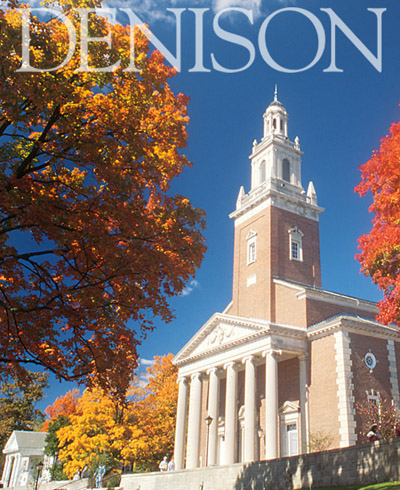
Blaine began his career as a doctoral student in IST in 2005. Prior to that, he double-majored in computer science and communications at Denison University (in my home state! although Blaine is from Delaware). Even as a fresh undergraduate, Blaine knew that he wanted to learn about both the technical and social components of computing. Coming to IST after graduating from Denison was a natural step.

According to Blaine's website, his research interests include "virtual community building and support, open-source software, design based research, creativity in relation to software, interface design, wireless technologies and their role(s) in communities, usability, design, video games and associated communities." That's a lot of interests, and the broad range is not uncommon for an IST student. Like many students whose research is computer-science based (in Blaine's case, HCI), his research tends to be published at confereces (and not in journals). Blaine has publications at the First International Workshop on Social Computing, Behavioral Modeling, and Prediction, the 10th INFORMS Computing Society conference, and Conference on Designing Interactive Systems 2006. He has also served as a reviewer for CHI 2007 and 2008 and DIS 2006.

It is evident from reading Blaine's website that his extracurricular interests and his research interests fit together very well. Although of course his hobbies include activities unrelated to IST (such as fiction, debate, and philosophy), he's an avid video gamer and enjoys web design and computer gadgetry. I work with Blaine on the Wireless State College research team, and I can personally report that his computing skills are excellent, and he seems to have a natural inclination to working with all sorts of technical tools -- and a genuine interest in discovering more.

Academically speaking, Blaine and I have a lot in common. I was also interested as an undergraduate in learning about both technical subjects and human communication: I majored in computer information systems, and I minored in English studies. Our similar paths drew us both to HCI, and we now work not only for the same advisor in the same lab, but on the same project. Of course, we diverge in some ways. For starters, Blaine is part of the "software team" within the Wireless project, whereas I work more as a social scientists and requirements gatherer, conducting interviews and focus groups to learn more about how wireless might benefit the community. This difference makes a lot of sense when I consider that Blaine seems to be more passionate about the technology piece of IST than I am. Although of course I am interested in technology, I do not tend to "junk around" with it at home, playing with computer gadgets and trying to make them better. I have never been a gamer, and until college, I had never programmed or done anything more technically advanced than create a basic HTML webpage.

Monday, September 29, 2008

My Advisor, Professionally Speaking

Last week I introduced you to my advsior, Jack Carroll, and this week I will continue by focusing on his professional life.

Jack has a Ph.D. from Columbia University in psychology. After earning his doctorate, he worked at the IBM Thomas J. Watson Research Center (pictured here) for many years. In 1994, Jack moved from industry to academia, accepting a position as Department Head of Virginia Tech's Computer Science department. Nine years later, he joined the faculty in IST, where he is the Edward M. Frymoyer Chair Professor, and the Director of Penn State's Center for Human-Computer Interaction.

A seasoned researcher, Jack has published thirteen books, hundreds of technical papers, dozens of miscellaneous reports. His work is mainly published in HCI-related venues, such as ACM's CHI conference, the International Journal of Human-Computer Interaction, the International Journal of Human-Computer Studies, Human-Computer Interaction, and Transactions on Computer-Human Interaction.

Jack's primary teaching duty at Penn State is the IST 522 course, which surveys theories and frameworks in human-computer interaction. This course, which is offered each fall, is among the core requirements for IST graduate students. Last spring, Jack taught a section of IST 402, a special topics course for undergraduates. He focused the course on community informatics, a research interest that he and I share.

Obviously, Jack is a highly prolific researcher and his professional experience makes him very well-equipped to advise students. I am grateful for his willingness to share his knowledge, experience, and expertise.

Saturday, September 20, 2008

All about Jack


Enough about me! Today, I have the singular pleasure of introducing my advisor, Dr. Jack Carroll. He was kind enough to grant an interview to Wendy, Shaoke, Honglu and me together, and this is what we discovered:

Jack is originally from a (not-so-little) town in eastern Pennsylvania called Bethlehem. After growing up in the Long Island area, he moved back to the Lehigh Valley area for high school and graduated from Lehigh University. He then returned to New York and earned his Ph.D. from Columbia University. Following the completion of his doctorate, he worked as a scientist at the IBM Thomas J. Watson Research Center for 17 years. This was where he met his wife, Mary Beth Rosson.

Jack and Mary Beth have similar backgrounds (psychology), and discovered over the years that that they were interested similar research. After working at IBM, they were both faculty at Virginia Tech until 2003, when they joined the faculty at Penn State's School of Information Sciences and Technology, which we now know as the College of IST. They frequently collaborate on research and writing, and although they try to avoid talking about work at home, they have found that it is often inevitable.

Jack and Mary Beth are also blessed with a daughter, who is currently a junior sociology major at Penn State. Although Jack reports that her personality is more similar to Mary Beth's than his, she shares his interests in community engagement and information technology, and he is happy to be able to share these passions with her. The Carroll family also has a cat, a dog, and a fish.

Among Jack's primary non-academic interests are hiking in the woods (often with Kerby, the dog) and brewing beer. He also plays folk guitar, a hobby he has enjoyed since he was 13. He even played in various bands during college and his early days at IBM. (I have to admit this was the part that surprised me most. IST concert, anyone?)

As someone who never lived in a college town until last year (and is still getting accustomed to it), I was interested in learning what Jack's favorite aspect of living in State College is. He happily reported that life here is significantly "easier" than living in a major metropolitan area like New York City. Traffic isn't stressful, shopping is accessible, parking is no problem, and the university influence gives us just enough culture and excitement. Jack commented that he and Mary Beth have absorbed a "factor of 1.8" difference between State College and Blacksburg, VA, where Virginia Tech is located. Everything here is about 1.8 times as big as it is in Blacksburg, including the campus, the downtown, and the accessibility to larger cities like Philadelphia, Washington, DC, and Baltimore.

It's fun to find out more about people's hobbies and interests when you usually only encounter them in a professional or academic environment. Remember when, as a child, if you saw your teacher in a grocery store or other "non-school" setting you would be overcome with a wave of shock and horror at the idea that your teacher was actually a person with a life outside of school? Luckily, at the university level, we do have more opportunities to interact with our professors at a personal level. And we certainly find out some cool stuff!

Another interesting factoid: Jack enjoys listening to Bob Dylan. So, in honor of that:

Saturday, September 13, 2008

You eat what you like, and I'll eat what I like.


Every entity, no matter how big or small, has a "flavor." YSU does, Penn State does, my high school does, Dunkin Donuts does. IST's flavor is largely related to its mission, composition, and raison d'etre.

IST's mission is to "change the world with inspired solutions, humanized technologies, and informed people" (the mission statement can be found here). It seeks to do this through studying people, technology, and information in context. You can see each "side" of the Great Triangle reflected in that mission: inspired solutions require technology and information; humanized technologies are designed by considering both people and technology; informed people have not just any information, but the right information, delivered the best way possible to help them make effective decisions.

The IST college is comprised of faculty, researchers, and students from a great variety of fields, many of whom never would have imagined they would end up here. But, somehow or other, their field of origin led them to a new discipline.

Graduate students know all about defenses -- perhaps more than we'd like sometimes. After toiling tirelessly over our work, be it a candidacy paper, master's thesis, or doctoral dissertation, we must be able to defend it to more advanced researchers, who analyze it with a critical eye. In a way, IST must defend itself too. Work is accomplished here day in and day out, faculty and students are recruited, papers are published, grants are awarded -- but unless we are able to move research forward and solve problems that cannot or will not be solved by anyone else, IST has no reason to exist.

So, what does this mean for our "flavor"? Well, we're new, we're trying something new, and I think we're very much aware of that. IST may have a fresh taste, but it is not very seasoned just yet. While members of the IST college (in any capacity) may take pride in the accolades we've earned thus far, there is a (mostly) tacit awareness that we are still an experiment.

However, despite that understanding, IST is still producing world-class research through the work of both prominent and new scholars. The amazing work that is done in human-computer interaction, information retrieval, privacy, and information fusion, among other fields, all lends strong credence to the value and necessity of IST.

Our college's structure reflects IST's ardent desire to be different, to truly integrate. We have no departments, so at first glance, every professor and student appears to be part of one, big, happy IST family. However, we do have labs and centers, each of which performs research that is very different from the others. Although this structure seems necessary for work to be accomplished -- it seems we must have some sort of group affiliation to be able to take on specific projects in specific domains -- I think that it does isolate faculty and students from one another. There is some "cross-talk," but not a lot. The system isn't perfect, and I think it is one of the most obvious flaws that reflects the inescapable reality that IST is still in its infancy. We want to be interdisciplinary, but we haven't figured out quite yet how to do that.

One might wonder if perhaps the less-than-ideal degree of integration in IST is a result of its faculty makeup. After all, very few faculty members within IST come from the IST discipline and worldview. Most were trained in traditional disciplines. Personally, I'm not sure. It's tempting to say that, perhaps in twenty years, an influx of iSchool-trained researchers into iSchools will transform them into settings that better reflect their mission. But, I know that I personally am drawn to one area within IST, and I've noticed that I'm not alone among my contemporaries.

I am part of Jack Carroll's and Mary Beth Rosson's human-computer interaction (HCI) lab. HCI grew out of computer science, and its strong basis in psychology makes it a great candidate for an interdisciplinary technology school like IST. But there are other labs and centers in IST in which I am not interested, despite my admiration for their work. Does this mean I am a single-discipline girl, and not a true iSchool patriot? I don't necessarily think so. Probably nobody is going to be passionate about every area that IST encompasses and every project that IST researchers undertake. The spirit of IST isn't that we all work on the same stuff, but that we all learn from and contribute to each other's work through a shared understanding that despite their many dissimilarities, all of our projects are complementary and turned toward the same goal.

IST is different from other colleges. We have a name that most people (even we) can't really explain; we don't have departments; the majority of our professors have degrees in other fields. Especially considering our origins as a from-scratch initiative, IST is a misfit at Penn State. But, much as that might make the "so what do you do?" conversation a bit more difficult at parties, and much as we might just want to throw in the towel and create more firm delineations so that administration is easier, and much as we might struggle with sharp learning curves as we struggle to understand scholars with backgrounds worlds away from ours -- I think we like being different. Not for the sake of being different, but because we like what we are and what we're trying to become. We may be different from the rest -- but that's perfectly okay with us.

Thursday, September 4, 2008

Nature of the Beast: iSchools

If I were to use the term "iSchool" in conversation with my parents or most of my friends, they would have no idea what I meant. Possibly some of them might conjure a mental image of a school administered by Apple, which at least reflects a technological aspect, but it is highly unlikely that they'd get at the heart of the matter. Even referring to my college as an "Information School" or "Information Sciences and Technology" program awards me with blank, confused, and befuddled expressions from many people, many of whom go to the same university that I do. They usually associate my work with engineering or computer science. From what I hear, this reaction is hardly unique.

According to the iSchools Caucus website, the researchers at iSchools study the interactions between people, information, and technology. Indeed, this is immediately recognizable to my graduate colleagues as the Great Triangle of our field. Our core courses center upon its three sides. The names of its vertices are abbreviated simply to "I, T, and P" in conversation, which is particularly confounding given that the abbreviation for our college is "IST."

As we discussed thoroughly in IST 503, Philosophy of Science, IST's development as a field of study has been rather unconventional, and it continues to follow an unusual path. Our identity is not like that of many disciplines, which can be summed up quickly and fairly concretely (i.e., biology is the study of life), because the phenomena we study are disparate, often novel, and difficult to classify. Information science is really a menagerie of disciplines, viewpoints, methods, and theories. It mixes library science, psychology, computer science, business, human factors, sociology, education, geography, and other fields, and attempts to study information, technology, and people.

Not all iSchools were created in the same way. As John Leslie King wrote in his article "Identity in the I-School Movement," there have been three ways that institutions have developed iSchools: "from the re-purposing of pre-existing schools; from the merging of pre-existing but disparate academic programs; and from the creation of altogether new programs by hiring faculty primarily from outside the institution." One can easily see how these three methods would result in quite different environments. My experience is limited to the latter choice, so I'm not especially equipped to comment upon the first two.

Being at a college that was deliberately formed as a completely new entity, comprised primarily of faculty who were trained in other disciplines, is an intriguing yet sometimes disconcerting experience. It can feel unnatural, especially in contrast to studying in well-established departments whose faculty were all trained in the same way. I think that one advantage to Penn State's model of creating a completely new program and attracting faculty from all over is that the faculty who came here undoubtedly knew what they were getting themselves into, and presumably welcomed the opportunity. Repurposed schools may be too strongly influenced by library science, computer science, business -- whatever they have been repurposed from. The Penn State model enables the scholars here to purpose IST together, so it is likely that our college will continue to pursue diverse interests in concert.

IST strives to be interdisciplinary and not simply multidisciplinary. Do we achieve this? My best answer would be that sometimes we do, and sometimes we don't. It's easier said than done to interact across disciplines and incorporate ideas from various fields. When it does occur, it can be fascinating and inspiring. But despite the grandiose, sweeping frame of our academic home, IST, like any academic department, is not an ivory tower. Academia is a tough place. At a Research I institution like Penn State, faculty members know that they must acquire grants, conduct impressive research, and publish prolifically, all while educating students. These requirements demand a standard of rigor that cannot always accommodate the time, energy, and thought needed to form cross-disciplinary connections.

When I chose Computer Information Systems as my undergraduate major, I did not anticipate that my baccalaureate degree would lead me naturally into a graduate program that accommodated students like me who have a mosaic of interests. I discovered IST serendipitously as my husband (then fiancé) and I searched for graduate programs during our last year of college. Our journey did not follow a straight and simple path. I first looked exclusively at library science schools. After further investigation, I realized that librarianship was not my calling. Given our desire to stay within a good driving distance of our hometown (3-4 hours maximum) and our dual academic needs (Colin is a Ph.D. candidate in physics) we finally settled upon the universities to which we would apply. In the end, my being here is not entirely a function of my preferring IST to the other colleges that accepted me. Coming to Penn State was a decision that Colin and I made together because it worked the best for us as a couple. In some ways, the iSchool ideal of combining multiple disciplines reflects my own academic persona. I have always been a person of diverse interests.